How to Improve Polyurethane Foam Insulation Performance?
Polyurethane foam is one of the most preferred materials for gap filling and insulation in modern construction and assembly work. However, if not applied correctly, the insulation performance of the foam may not reach the desired level. In this article, we will discuss in detail the methods, technical tips, and tricks to consider in order to improve the insulation performance when using polyurethane foam.
1. Improve Performance with Surface Preparation
Surface preparation is essential for optimal foam performance. A clean and dry surface enhances both the adhesion and expansion of the foam.
- Remove dust, oil, and loose particles.
- Slight moistening, if needed, helps the foam expand.
- Prevent flooding in wide gaps by using supports or wedges.
2. Choosing the Right Type of Foam
One of the most important steps in improving insulation performance is selecting the right foam for the application area. Different foams with different properties are suitable for each type of gap and surface.
- Low-expansion foam: Ideal for delicate assemblies and tight spaces.
- High Expansion Foam: Quickly fills large gaps and cracks, and enhances insulation.
- Elastic or Fire-Resistant Foam: Used in areas exposed to heat or requiring safety measures.
3. Effective Insulation Through Application Technique
The insulation performance of foam depends not only on the material itself; correct application techniques are also crucial. It's necessary to fill gaps evenly and pay attention to the expansion time.
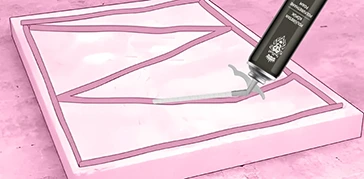
- Apply the treatment in a controlled manner, starting from the center of the gap.
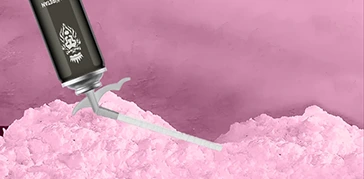
- Prevent overflow by applying multiple layers in large gaps.
- Do not interfere with the foam until it has completely hardened.
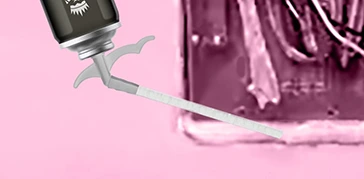
- For confined spaces, use a pipette for foam, and for larger spaces, use a foam gun.
4. Optimize Environmental Conditions
Temperature and humidity directly affect the expansion and adhesion of the foam. Attention to environmental conditions is necessary to improve insulation performance.
- The ambient temperature should be between 5-35°C.
- High humidity promotes foam expansion and adhesion.
- Low humidity or extreme temperatures can reduce insulation performance.
5. Calculate the Space Size Correctly
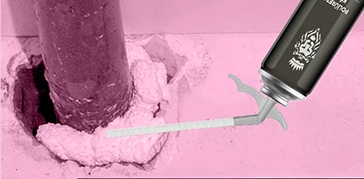
The gap dimensions must be calculated correctly, taking into account the expansion properties of the foam. Too much or too little foam will reduce the effectiveness of the insulation.
- Applying multiple coats in large gaps gives better results.
- Prevent deformation in delicate assemblies with low-expansion foam.
- Remove any excess foam after application and smooth the surface.
6. Final Touches and Checks
After application is complete, final checks should be performed to improve insulation performance. Ensure that gaps are filled evenly and that the foam has fully hardened.
- Sand or trim excess foam if necessary.
- Make sure every gap is filled.
- Visually and tactilely inspect the application for heat and sound insulation.
Conclusion
Improving insulation performance with polyurethane foam is possible with proper surface preparation, appropriate foam selection, controlled application, and ideal environmental conditions. When these steps are followed carefully, gaps will be completely filled, heat and sound insulation will be maximized, and a long-lasting solution will be provided. In short, a small but careful application makes a big difference.
The information in this text may vary from time to time depending on the manufacturer. Always check the product label.