How to Achieve Thermal Insulation with Polyurethane Foam?
Polyurethane foam is one of the most preferred materials for thermal insulation in the construction industry. The main reason for this is that the foam expands on the surface where it is applied, completely filling the gaps, preventing air flow, and providing high insulation performance. Moreover, it is easy to apply and gives effective results on different surfaces. In this article, we explain step-by-step how to do thermal insulation with polyurethane foam and detail all the points to be considered.
1. The Role of Polyurethane Foam in Thermal Insulation
The primary cause of heat loss is voids, cracks, and air leaks in building elements. Polyurethane foam expands in the area where it is applied, filling these voids and preventing air passage. The main reasons for its effectiveness in thermal insulation are as follows:
- To fill the gaps completely
- Prevents air leaks
- It reduces temperature differences thanks to its low thermal conductivity.
- It adheres perfectly to the surface it is applied to.
- It forms a barrier against moisture and vapor penetration.
Thanks to these properties, polyurethane foam allows individual users to easily and practically perform thermal insulation.
2. In which areas is it used for thermal insulation?
Polyurethane foam can be used in many areas for thermal insulation. The surface to be insulated plays an important role in determining the type of foam and the application method.
- Wall cavities
- Window and door frames
- Roof spaces and attic spaces
- Beam and column perimeters
- Bathroom and kitchen plumbing passage areas
- Small holes that allow cold air to enter.
The more accurately the application area is determined, the higher the insulation performance will be.
3. Pre-Application Preparation
Surface preparation is crucial for successful thermal insulation application. The following steps should be observed:
- Dust and dirt must be removed.
- Loose surfaces should be scraped away.
- The surface must be dry (some foams may adhere to slightly damp surfaces).
- The area where the application will be carried out must be determined.
- The surrounding areas should be covered with protective material to prevent the risk of flooding.
The preparation phase ensures better adhesion of the foam to the surface and prevents unwanted deformations during expansion.
4. Choosing the Right Foam
The properties of polyurethane foam used for thermal insulation are of great importance. Foams with high filling capacity are generally preferred for thermal insulation. The amount of expansion should be determined according to the size of the area to be insulated.
- Low-expansion foams for small spaces.
- Foams with high filling capacity for large areas.
In addition, products with high UV resistance should be preferred for outdoor applications.
5. Wall Thermal Insulation with Polyurethane Foam
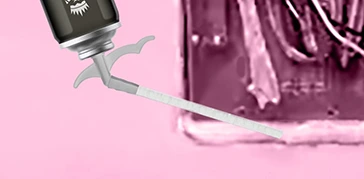
Heat loss can occur in walls, especially around electrical outlets, plumbing routing areas, and joints. Filling these areas with polyurethane foam significantly reduces heat loss.
Application Steps:
- Clean the surface.
- Shake the foam tube.
- Insert the nozzle or gun tip into the gap.
- Apply the foam slowly.
- Wait for the foam to expand completely.
- Trim off the excess with a craft knife.
This process significantly reduces the entry of cold air through wall cavities.
6. Thermal Insulation Around Window and Door Frames
Window and door frames are among the areas where heat leakage is most common. Polyurethane foam provides excellent insulation in these areas because it can fill even the smallest gaps around the frame.
During application, it is preferable to use foams with a low expansion rate, otherwise the shape of the casing may be distorted. Therefore, medium-expansion foams are more suitable.
7. Attic and Roof Insulation
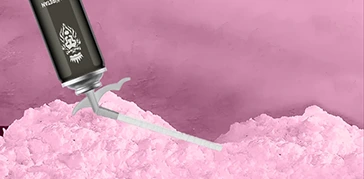
Roofs are the areas where the greatest heat loss occurs in buildings. Filling attic spaces with polyurethane foam minimizes hot air leakage. This application offers a significant advantage, especially in cold regions.
Foam applied under the roof reduces heat loss and prevents the formation of air gaps on the surface. It also provides additional protection against water leaks.
8. Insulation in Ground and Sublayers
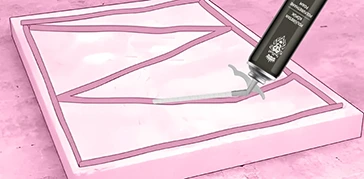
In some buildings, voids under the floor or pipe penetration areas can cause heat loss. Polyurethane foam offers a practical and effective solution in these areas.
Ensuring the surface is completely dry during application allows for better adhesion of the foam. After expansion is complete, excess material can be trimmed before proceeding with the floor covering application.
9. Insulation Around Pipes and Installations
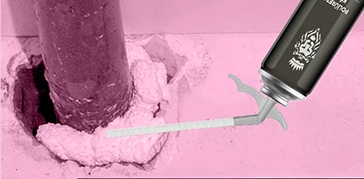
Pipe penetration areas are among the regions where both heat loss and cold air ingress are most frequent. Reinforcing these areas with foam improves insulation performance.
- Heat loss is reduced in hot water pipes.
- A leak-proof seal is ensured.
- It creates a barrier against insect and pest entry.
10. Points to Consider During Application
When applying polyurethane foam for thermal insulation, the following points should be given special attention:
- The tube must be shaken.
- A thin application method is preferred, and the foam should be allowed to expand.
- Excessive application should be avoided.
- The surface should not be touched until the foam is completely dry.
- Application should be done carefully in areas with air currents.
These steps both improve application quality and maximize product performance.
11. Cutting the Foam and Arranging the Surface
Once the foam has fully hardened, any excess can be easily trimmed with a utility knife. During this process, the surface should be left as smooth as possible. Afterward, plaster, paint, or coating can be applied as desired.
12. Tips for Improving Thermal Insulation Performance
For more effective insulation, you can pay attention to the following suggestions:
- Even the smallest gaps should not be neglected.
- Foam should be applied in several thin layers, not in a single coat.
- Products with high UV resistance should be used on exterior surfaces.
- If the gap is wide, the application should be done in sections.
- If the humidity level is high, the application should be done slowly.
13. Conclusion
Polyurethane foam is an extremely practical and effective material for thermal insulation. With proper application, it significantly improves insulation performance in many areas such as walls, roofs, windows, pipes, and floors. Moreover, it is easy to apply and offers long-lasting results. High efficiency can be achieved with the right foam selection, surface preparation, and appropriate application techniques step-by-step.
The information in this text may vary from time to time depending on the manufacturer. Always check the product label.